
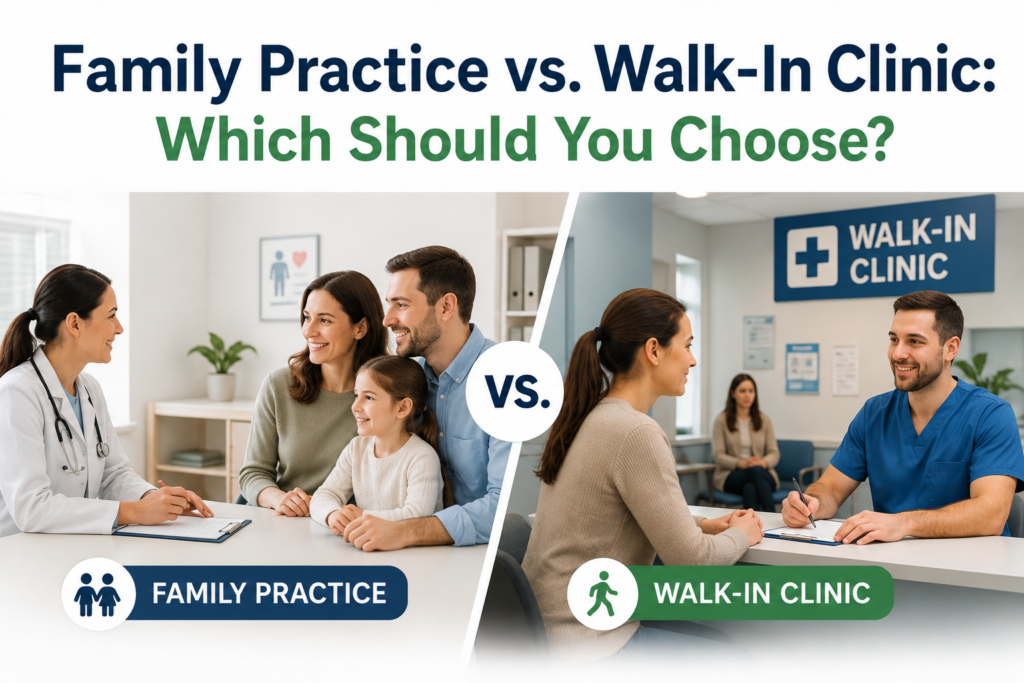
When you need medical care, one of the first questions you may have is: Should I visit a family practice or a walk-in clinic? Both can provide valuable healthcare, but they serve somewhat different purposes.
A family practice is generally designed around ongoing, relationship-based care. A walk-in clinic, on the other hand, can be useful when you need medical attention for a new or non-emergency concern and cannot wait for a scheduled appointment.
Understanding the difference can help you choose the right type of care for your situation and make your healthcare experience more convenient.
What Is a Family Practice?
A family practice provides ongoing healthcare for individuals and families. Instead of focusing only on a single health concern, family healthcare can involve preventive care, routine assessments, treatment of common conditions, and ongoing management of health concerns.
A family practice can be particularly useful when you want to have a consistent healthcare provider who becomes familiar with your medical history, medications, previous concerns, and overall health needs.
Depending on the practice, services may include:
- Routine health assessments
- Preventive healthcare
- Diagnosis and treatment of common illnesses
- Management of ongoing health conditions
- Physical examinations
- Health counselling
- Follow-up appointments
- Referrals when specialist care is appropriate
This continuity can be especially helpful when your healthcare needs change over time.
What Is a Walk-In Clinic?
A walk-in clinic provides medical care without requiring you to have an established relationship with a particular healthcare provider. Patients can typically seek care for concerns that need attention but are not life-threatening emergencies.
For example, someone may consider a walk-in clinic when they develop a new illness, experience a minor injury, or need medical advice when their regular healthcare provider is unavailable.
Walk-in care can be convenient because it may provide an alternative when you need attention sooner than a scheduled appointment allows.
However, the availability of services, appointment requirements, and operating hours can vary between clinics. It is always a good idea to check with the clinic before visiting.
Family Practice vs. Walk-In Clinic: What’s the Difference?
The biggest difference is often continuity of care.
A family practice is usually focused on building a long-term healthcare relationship. Your provider can monitor your health over multiple visits and maintain an understanding of your medical history.
A walk-in clinic is generally focused on addressing the immediate concern that brought you in.
Neither option is automatically better. The right choice depends on the type of care you need.
| Family Practice | Walk-In Clinic |
| Ongoing healthcare relationship | Convenient care for new concerns |
| Regular health monitoring | Often suitable for non-emergency issues |
| Follow-up care | Useful when your regular provider is unavailable |
| Preventive healthcare | May provide same-day or prompt assessment |
| Management of ongoing conditions | Focused on the current concern |
When Is Family Practice a Better Choice?
A family practice may be the better option when you need ongoing or preventive healthcare rather than care for a single isolated problem.
1. You Want Regular Healthcare
Having a consistent provider can make it easier to keep track of your health over time. Your provider may already be familiar with your previous appointments, medications, health concerns, and test results.
This can make follow-up care more straightforward.
2. You Need Ongoing Condition Management
People living with ongoing health concerns may benefit from regular appointments and monitoring.
Instead of addressing each concern as a separate event, a family practice can provide a more continuous approach to healthcare.
3. You Need Preventive Care
Preventive healthcare focuses on identifying potential concerns early and supporting overall health.
Depending on your age, health history, and individual circumstances, preventive care may include routine assessments, screening discussions, vaccinations, lifestyle guidance, and other appropriate healthcare services.
4. You Need Follow-Up Care
Some health concerns require more than one appointment.
A family practice can provide continuity when you need follow-up after an assessment, treatment, or change in your health.
5. You Need Care for Different Family Members
Family practices may serve people at different stages of life. Having access to ongoing healthcare in one practice can make healthcare planning more convenient for families.
If you’re looking for a Family Healthcare Practice, choosing a clinic that offers comprehensive and patient-focused care can be an important part of establishing a long-term healthcare routine.
When Might a Walk-In Clinic Be More Appropriate?
A walk-in clinic may be useful when you have a new, non-emergency health concern that needs attention and you don’t have a scheduled appointment.
For example, you might consider walk-in care for:
- A new minor illness
- A minor injury
- A sudden but non-emergency health concern
- A health issue that requires prompt assessment
- A concern that occurs when your regular provider isn’t available
The exact services available differ between clinics, so check with the clinic before visiting if you are unsure whether they can address your concern.
What If You Need Both?
In reality, you don’t necessarily have to choose one option forever.
You may have a family practice for regular healthcare while using walk-in services when you have an occasional concern that requires attention outside your normal appointment schedule.
The important thing is to understand what type of care you need and choose an appropriate healthcare setting.
If you visit a walk-in clinic for a concern that may require ongoing management, make sure your regular healthcare provider is aware of relevant information from the visit. Keeping your medication list, test results, and medical information up to date can also make communication between healthcare providers easier.
Family Practice Can Support Long-Term Healthcare
One of the major benefits of family practice is the opportunity to build continuity into your healthcare routine.
Rather than waiting until something goes wrong, regular healthcare can help you discuss concerns, review changes in your health, and determine whether additional assessment or preventive care may be appropriate.
A provider who knows your health history may also be better positioned to understand how a new concern fits into your overall health picture.
This doesn’t mean every health issue requires a family practice appointment. For some immediate but non-emergency concerns, walk-in care may be a practical option.
Don’t Forget About Your Pharmacy Needs
Healthcare doesn’t stop when you leave the medical clinic. Managing prescriptions and medications is another important part of maintaining your health.
Depending on your pharmacy, services may include prescription refills, medication support, pharmacist consultations, and delivery options.
For patients who have difficulty making regular pharmacy trips, free prescription delivery can provide an additional convenience when the service is available and the prescription qualifies.
If you use multiple healthcare providers, keeping your pharmacy information and medication list current can also help you communicate more effectively with your healthcare team.
How Do You Decide Which One to Choose?
Before choosing between family practice and walk-in care, ask yourself a few simple questions:
Is this an ongoing health concern?
If yes, establishing care with a family practice may be more appropriate.
Do I need regular follow-up?
If your concern requires monitoring or repeated appointments, continuity of care can be valuable.
Is this a new, non-emergency concern?
A walk-in clinic may be a convenient option, particularly if your regular provider isn’t available.
Do I need preventive or routine healthcare?
A family practice may be better suited for ongoing preventive care.
Is the situation an emergency?
If you are experiencing a serious or potentially life-threatening medical emergency, don’t rely on a walk-in clinic or routine family practice appointment. Seek appropriate emergency medical care immediately.
Family Practice and Walk-In Care: Choosing What Fits Your Needs
There isn’t one healthcare option that is right for everyone.
A family practice can be valuable for people who want continuity, preventive care, regular monitoring, and an ongoing relationship with a healthcare provider. A walk-in clinic may be more suitable for a new, non-emergency concern when you need medical attention without relying on a scheduled appointment.
Understanding these differences can help you make a more informed decision about where to seek care.
If you’re looking for a Medical Centre in Edmonton that can support your healthcare needs, consider speaking with the PremierCare team to learn more about available services and appointment options.
Frequently Asked Questions
1. Is a family practice the same as a walk-in clinic?
No. A family practice generally focuses on ongoing healthcare and continuity with a healthcare provider, while a walk-in clinic typically provides care for immediate, non-emergency concerns without requiring an established patient relationship.
2. When should I choose a family practice?
A family practice may be appropriate when you need regular healthcare, preventive care, ongoing condition management, physical examinations, or follow-up appointments.
3. When should I visit a walk-in clinic?
A walk-in clinic may be suitable for a new, non-emergency health concern that needs attention, particularly when your regular healthcare provider is unavailable. Services vary by clinic, so check before visiting.
4. Can a family practice provide preventive healthcare?
Yes. Depending on the clinic and your individual needs, family practice may include routine assessments, preventive care discussions, vaccinations, screening recommendations, and ongoing health monitoring.
5. Can I use a walk-in clinic if I already have a family doctor?
Yes, depending on the clinic and your healthcare needs. However, it’s useful to keep your regular healthcare provider informed about relevant assessments, treatments, or medication changes so your health information remains up to date.
6. Should I go to a walk-in clinic for an emergency?
No. Walk-in clinics are generally intended for non-emergency concerns. If you have symptoms of a serious or life-threatening emergency, seek emergency medical care immediately.
Need Help Choosing the Right Care?
Choosing between family practice and walk-in care depends on your health concern, the type of care you need, and whether you require ongoing follow-up.
If you have questions about available healthcare services or want to learn more about family practice at PremierCare Medical Centre, contact our team today.